
When Should I Hire a Telehandler Instead of a Forklift?

Choosing between a telehandler and an industrial forklift determines how efficiently materials are handled across your site. Selecting the incorrect lifting equipment can slow down logistics or create safety risks on unpaved ground.
Understanding the unique capabilities of telescopic handlers ensures your site operations run smoothly and remain compliant. Selecting the right machinery keeps materials moving safely whether on smooth concrete pads or rough construction terrain.
Working Across Rough Terrain and Unmade Ground
Many telehandlers feature four-wheel drive and heavy-duty tyres designed to help traverse uneven construction sites. Standard industrial forklifts are generally more suited to firm, level surfaces.
The summary below details how telehandlers maintain stability across challenging outdoor ground conditions:
Deep-tread pneumatic tyres provide exceptional grip across thick mud, loose gravel, and steep inclines
High ground clearance prevents machine chassis bottoming out over rutted earth and site debris
Four-wheel steering modes enable nimble navigation around cramped building sites and muddy tracks
Deploying a telescopic handler ensures material deliveries continue uninterrupted despite wet weather or rough terrain.
Reaching Forward and Over Obstacles
Unlike standard forklifts that only lift vertically, telehandlers feature a telescopic boom that extends forward and upwards. This capability allows operators to place heavy loads over scaffolding, walls, and temporary site hoardings where suitable.
The following points highlight how forward reach capabilities simplify complex site loading operations:
Forward boom extension allows direct loading across wide flatbed lorries from a single side
Extended reach simplifies placing palletised bricks directly onto elevated scaffold platforms and upper floors
Precise hydraulic controls allow operators to position materials accurately across deep foundations and excavation trenches
Utilising forward reach capabilities can reduce unnecessary double-handling and speeds up material placement across the project.
Achieving Significant Lifting Heights on Structural Builds
Building projects often require materials to be raised to upper storeys during structural assembly. Telehandlers offer impressive reach heights that far exceed the vertical limitations of conventional industrial forklifts.
Here is how high-reach capabilities support multi-storey building construction and timber frame assembly:
Telescopic booms achieve working heights up to twenty metres for upper floor material deliveries
Stabiliser legs deploy to create a wide, secure base when lifting heavy payloads to maximum heights
Integrated frame levelling maintains machine stability on sloping ground while lifting high loads
Opting for high-reach access equipment keeps structural trades supplied with materials throughout the build process.
Versatile Attachment Options Beyond Standard Fork Prongs
Telehandlers function as multi-purpose machines by swapping standard pallet forks for specialised hydraulic attachments. Conventional forklifts are generally limited to pallet handling and may be less suited to wider site tasks.
The details below explain how quick-attach tools transform a telehandler into an all-round site machine:
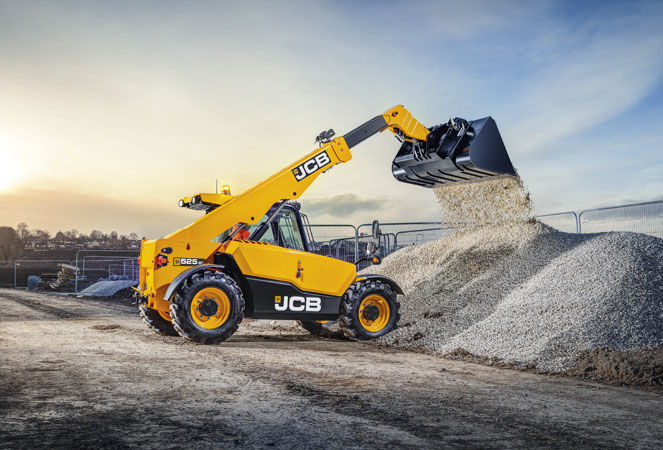
Rehandling buckets quickly convert the machine into a loader for moving bulk aggregates and topsoil
Lifting hooks and jib arms turn the unit into a compact mobile crane for structural beams
Hydraulic sweepers simplify end-of-day site clearance and mud removal from public access roads
Investing in attachment versatility reduces the need to hire multiple pieces of single-use plant equipment.
Lifting Heavy Payloads and Substantial Bulk Deliveries
Commercial developments frequently involve offloading packs of timber, steelwork, and heavy concrete products. Telehandlers provide high load capacities paired with robust counterweights to move bulk items safely.
Consider these key operational advantages when moving heavy building supplies across expansive working areas:
High lifting capacities comfortably handle heavy packs of roof trusses and precast concrete lintels
Heavy-duty chassis design maintains stability under full load across uneven working zones
Advanced load moment indicators alert operators to weight limits to comply with UK Building Regulations and prevent forward tipping accidents
Relying on a heavy-capacity telescopic handler guarantees safe, efficient offloading for demanding structural site deliveries.
Maximising Site Efficiency with the Ideal Lifting Solution
Choosing a telehandler over a standard forklift provides the reach, power, and versatility needed for rough terrain. Selecting the correct lifting machine prevents expensive delays and keeps site logistics operating safely.
Consulting plant hire specialists ensures you secure the ideal boom length and weight capacity for your project. Hiring the right telescopic handler lays the groundwork for a safe, well-organised, and productive build.


Comments